Dawn, Dockside, Dusk: One Navy Wardrobe, Three Moods
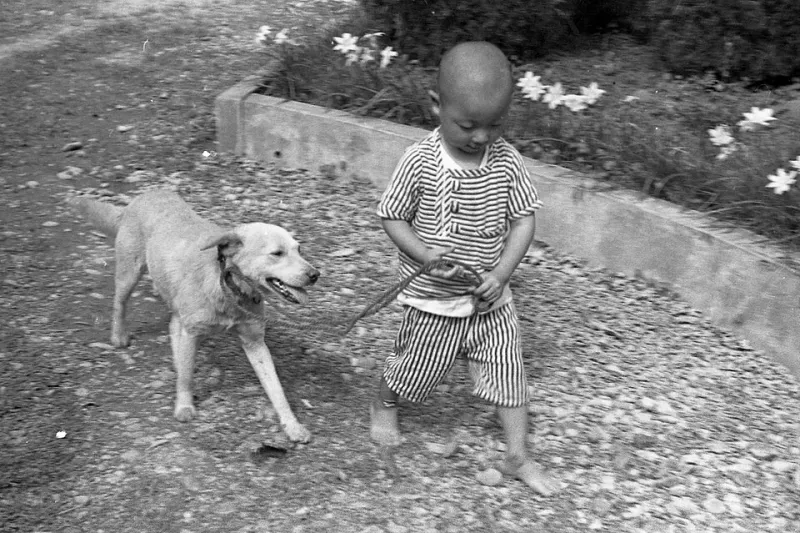
Photo: 鄧南光, Public domain, via Wikimedia Commons
There's a particular kind of honesty that happens at 6 A.M. near the water. Nobody's performing yet. The light is gray, the coffee is hot, and whatever you threw on is exactly what you actually like. By 2 P.M., the same day has turned loud — sun, wind, a hardware-store run, maybe a detour past the marina to envy someone else's hull. And by 9 P.M., there's a reservation with your name on it and a faint line of salt on your forearms.
The trick to coastal dressing isn't owning more. It's owning pieces that bend across a whole day without breaking. Navy is the obvious anchor here — it hides dawn fog, midday glare, and dinner-candle light equally well — but the structure around it is what changes. Here's the full rotation.
6 A.M.: The Fog Shift
Early morning by the water is cold in a way the forecast never quite captures. The damp gets into everything. This is not the hour for fashion; this is the hour for layers you'll thank yourself for.
The formula: a heavyweight navy hoodie or fisherman's sweater over a plain tee, broken-in sweatpants or canvas pants, and the oldest decent pair of sneakers you own. Beanies are non-negotiable. If you're walking a dog, add gloves — nobody looks cool with frozen knuckles.
The unspoken rule of the 6 A.M. hour: comfort is the style. Everyone out at dawn is out for the same reason — the quiet, the light, the head start — and nobody's grading anyone's fit. That said, there's a difference between thrown together and considered. A matching navy sweat set reads intentional even when it took eleven seconds to grab. That's the marine-blue cheat code: when everything's one color family, even your laziest outfit looks like a decision.
2 P.M.: The Marina Run
Midday is when the coast gets busy. Errands, boat supplies, a lunch spot with a line out the door, the neighbor who wants to talk about dock repairs for twenty minutes. You need to look like a functioning adult who could plausibly own a boat.
The formula: swap the sweatpants for washed-out navy chinos or straight-leg denim, keep the tee, and add a lightweight overshirt or unstructured chore jacket. Shoes matter here — canvas sneakers or a worn pair of boat shoes signal that you're comfortable near water, not just posing near it. Sunglasses on, not hanging from your collar.
This is also the slot where texture earns its keep. Midday sun is unforgiving; flat, cheap fabric shows every flaw. Slub cotton, faded canvas, and sun-bleached denim all photograph better at noon than anything glossy. Lean into the fade. A jacket that's lost a little color to real weather will always beat one that came pre-distressed in a warehouse.
One more thing: pockets. The 2 P.M. slot is a pockets-forward operation — keys, phone, a coiled length of rope you didn't ask to carry. Cargo-adjacent is fine. Fumbling is not.
9 P.M.: The Waterfront Dinner
Evenings by the water have a dress code nobody writes down. It's nicer than daytime but nowhere near formal — call it dinner-reservation casual with a breeze factor. The wind off the water doesn't care that you wore a linen blazer; it will treat it like a sail.
The formula: dark navy trousers or clean dark denim, a Breton stripe or fine-gauge navy knit, and a proper jacket — a navy blazer if the restaurant leans traditional, a wool overshirt if it doesn't. Loafers or leather sneakers, never sandals past noon. A watch with a canvas or leather strap finishes it.
The move here is contrast through finish rather than color. You're still in the same palette as your 6 A.M. self, but everything is smoother, darker, more deliberate. Swap slub cotton for merino. Swap canvas for leather. Same family, better manners.
The Through-Line
Notice what never changed: the color. That's the whole argument for a marine-blue wardrobe. When your base is consistent, the day's demands become adjustments instead of overhauls. Swap bottoms, adjust a layer, change your shoes, done. You're not rebuilding an outfit three times — you're tuning one.
It also means packing light if you're staying overnight. A duffel with a sweater, an overshirt, one pair of trousers, and two pairs of shoes covers the entire arc from fog to dessert. Try that with a multi-color wardrobe and you'll be hauling a suitcase for the same coverage.
There's something else, too — something less practical. Dressing in the same deep blue from dawn to dusk creates a kind of continuity with the day itself. The water at 6 A.M. and the water at 9 P.M. are the same water wearing different light. Your clothes can work the same way. Same color, different hour, different mood. The tide doesn't change the ocean. It just changes how you see it.