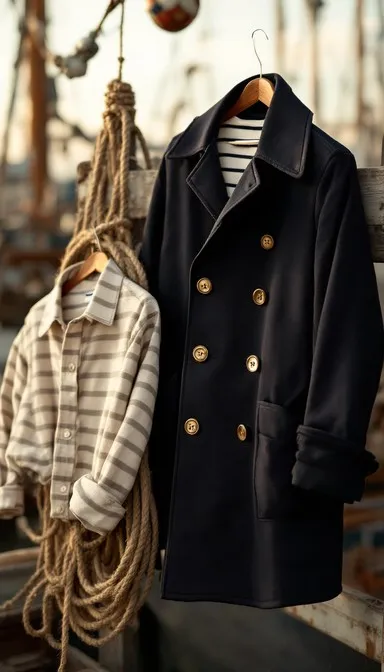
Gear That Won't Quit: Why Fishermen Understood Fashion Before Fashion Did
The Opinion, Stated Up Front
Here's a take we'll defend: most of what the fashion industry calls 'heritage style' was invented by people who had zero interest in style. The fishing crews of Gloucester, Kodiak, and Chesapeake Bay weren't curating a look. They were trying to stay warm, dry, and alive — and the gear that got them through the season is exactly what downtown is wearing now.
Function-first design ages well. Trend-driven design ages like milk. That's the whole essay, really, but stick around anyway.
Saltwater Is the Ultimate Product Tester
The ocean is merciless to materials. Salt corrodes, sun degrades, water saturates, and cold finishes the job. Anything that survives a working season offshore has passed a test no lab can replicate.
So when a jacket earns its place in the maritime trades, it stays there for decades. Consider the lineup:
Oilskin and foul-weather shells. Waxed cotton and oilcloth jackets were the original waterproofing — a layer of oil or wax over canvas that shed rain and spray. No zippers to fail, no membranes to delaminate. Just fabric treated to do one job. The modern waxed jacket is the same idea with better tailoring.
The knit watch cap. The wool watch cap wasn't a beanie with a backstory. It was the difference between a warm head and a miserable — potentially dangerous — watch shift. Wool insulates even soaked, which is why the design hasn't changed in a century and doesn't need to.
Canvas trousers and bib overalls. Heavy duck canvas took the abuse of nets, hooks, and decks. Double knees, deep pockets, no frills. Sound familiar? Every workwear brand in America is selling a version of this.
Deck boots and galoshes. Non-slip soles weren't a marketing feature. On a wet deck, they were the only thing between you and the rail.
None of this was styled. All of it works. That's the formula 'nautical-cool' keeps rediscovering.
The Brands Keeping the Line Open
A handful of American makers never treated this gear as a trend — they've been supplying working fleets for generations, and the fashion crowd is a recent bonus.
Filson — Seattle-based since 1897, with tin cloth and bridle leather goods built for people who actually use them. The workwear standard.
Stormy Kromer — the Michigan cap maker whose wool hats started with a train engineer but found a natural home with anyone facing wind off open water.
Grundéns — founded to outfit Pacific Northwest commercial fishermen; its bibs and jackets are still working gear first, streetwear second.
L.L.Bean — the Maine icon built its reputation on a hunting boot, but its maritime DNA runs through every waxed jacket and wool sweater it still sells.
Red Clouds Collective and smaller coastal makers — a new wave of small shops cutting canvas and waxed goods in the same spirit, often in port cities where the influence is literal.
How to Wear It Without Playing Dress-Up
The line between 'functional heritage' and 'lighthouse costume' is real. A few guardrails:
- One statement piece per outfit. A waxed jacket over plain clothes. A watch cap with a simple coat. Not everything at once.
- Choose muted tones. Navy, olive, tan, charcoal. Bright orange foul-weather gear is for the boat, not the bar.
- Buy fewer, better things. This gear is priced for longevity. A $200 jacket you own for fifteen years beats five $40 jackets you replace every two.
- Let it wear in, not out. Fading, creasing, and salt stains are the aesthetic. Don't fight the patina.
The Takeaway
'Nautical-cool' gets described as a vibe, but it's really a provenance. It's proof that the best design solves a problem so completely that the solution becomes beautiful on its own. The fishermen figured that out generations before the rest of us. We're just catching up.