Somewhere Between the Aisle and the Ocean: A Field Guide to Being the Best-Dressed Wedding Guest on the Coast
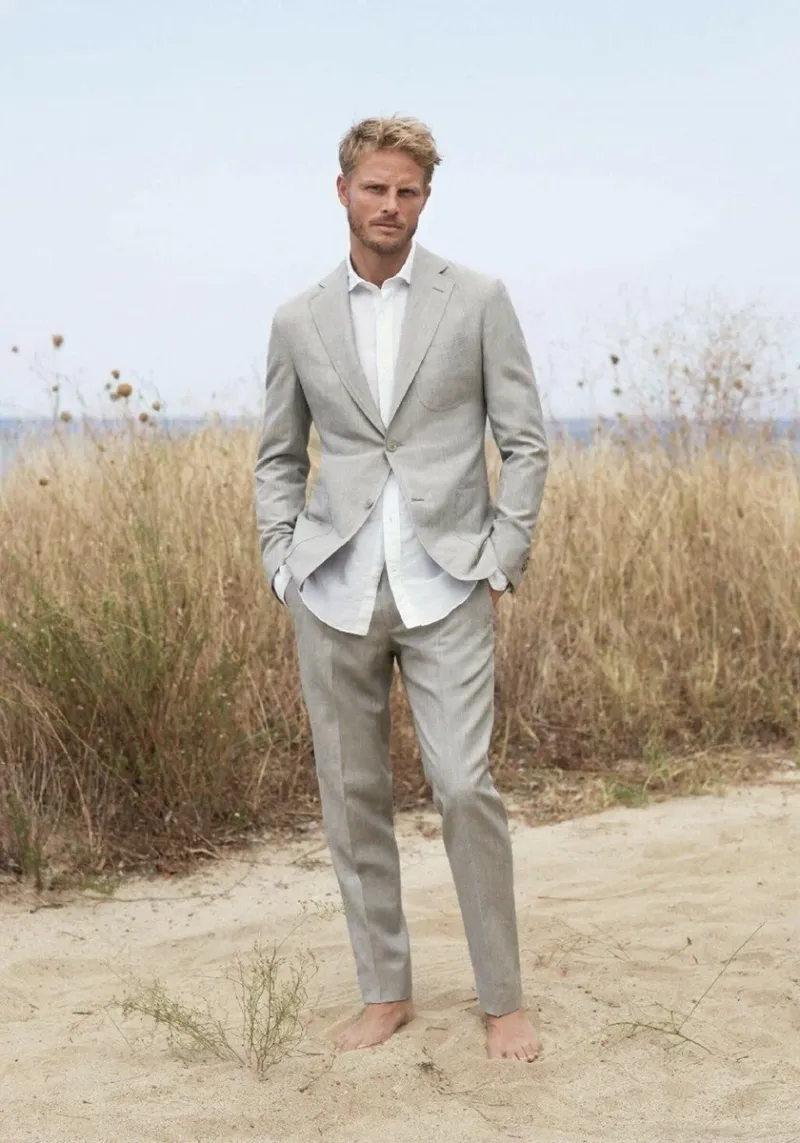
Photo: wedding guest linen suit beach ceremony summer coastal, via i.ebayimg.com
Somewhere in a beach town near you, right now, a man is googling 'can you wear boat shoes to a wedding.' The answer is no. But the question itself tells you everything about the strange spot coastal America occupies every summer, when the wedding invitations pile up and every third one says something maddening like 'beach formal' or 'coastal cocktail' or — our personal favorite — 'elegant seaside casual,' which is not a dress code so much as a cry for help.
Here's the thing nobody tells you: navy is the single best-kept secret in wedding-guest dressing. Not black, which reads funereal on a sunny lawn. Not gray, which photographs like fog. Navy. It's formal enough for a country club, relaxed enough for a dune ceremony, and it happens to be the color we'd defend with our lives. But wearing it well — especially at a wedding with a water view — requires a little strategy.
First, Read the Room (and the Invite)
Dress codes on the Eastern Seaboard and the West Coast might as well be different languages. 'Beach formal' in Newport means a navy suit, a pressed shirt, real leather shoes, and possibly a pocket square. 'Beach formal' in Malibu might mean unstructured linen, no tie, and shoes you can kick off before the sand. Neither is wrong. Both will get you side-eyed if you misjudge them.
The reliable tells: venue, time, and wording. A 4 p.m. ceremony at a yacht club means dress up, full stop. A 5:30 ceremony 'on the sand' followed by 'casual reception' means you can breathe — but you should still look intentional. The biggest mistake guests make isn't overdressing. It's dressing casually without precision, which reads as sloppy rather than laid-back.
The Navy Suit Is Doing the Heavy Lifting
If you own one summer wedding suit, make it navy in a warm-weather fabric. Linen-blend or high-twist wool will survive humidity from Charleston to Cape Cod without collapsing into an accordion. The cut matters more than the label: a softer shoulder and a slightly shorter jacket keep things celebratory rather than corporate.
Then break it up. A white shirt is the default and a good one. But a pale blue shirt, a white shirt with subtle texture, or — if the crowd skews relaxed — a fine navy-and-white striped knit under an unstructured jacket adds personality without a costume. Tie optional in most coastal settings; if you wear one, keep it matte. Shiny silk next to linen looks like a sales convention.
What Not to Wear, With Feeling
We'll be direct, because someone has to be.
Boat shoes at a wedding. No. They're for the deck, the dock, and the driveway. If the ceremony is literally on sand, go sockless in a leather loafer or dressy sandal-adjacent option for men who can pull it off — but boat shoes read 'I confused the rehearsal dinner with the wedding.'
An anchor on your tie. One nautical cue per outfit. A seersucker bow tie is charming. A tie printed with sailboats, worn with a rope belt, is a theme party of one.
Full seersucker head to toe. Seersucker is glorious in the right dose — a jacket, a shirt, trousers. The whole suit in the Deep South at a traditional wedding? Actually, fine. Anywhere else? Proceed with caution and check with the couple.
White or cream, ever. You know this. The ocean doesn't change it.
A Regional Rundown, Coast to Coast
Maine and coastal New England: Preppy is native here, so you can lean into it. Navy blazer, gray or stone trousers, no tie after sundown. Lobster-themed anything stays home.
The Chesapeake and the Carolinas: Seersucker territory, where a navy coat over a striped shirt lands perfectly. Humidity is the real enemy — linen is your friend and your excuse.
Florida and the Gulf: More skin, more linen, less structure. A navy camp-collar shirt with tailored trousers is completely acceptable at most beach weddings — but confirm the formality first. Miami weddings do not play.
Southern California: The most relaxed code in the country, but 'relaxed' here means expensive-looking ease. Unstructured navy suit, no socks visible, leather sandals or loafers. Effortless is a full-time job.
The Pacific Northwest: Layers. A ceremony at Golden Gardens at 6 p.m. can drop twenty degrees. Navy wool trousers, a knit shirt, and a casual jacket you can shed will make you the smartest person at the cocktail hour.
The Great Lakes: Freshwater weddings are the sleeper hit of American nuptials, and the dress code splits the difference — more formal than the coasts, less stiff than the inland South. A proper navy suit, no linen required, will never fail you in Traverse City.
The Guest, Not the Crew
The final principle is simple: the couple is the crew of the day. Your job is to look like someone who understands the water but didn't sail here. One nautical note — a stripe, a texture, a shade of blue pulled from the horizon — is a compliment to the setting. Two is a wink. Three is a uniform, and nobody should be in uniform at someone else's wedding.
Navy, worn with intention, threads that needle better than any color in the closet. It photographs beautifully against water, sand, and sunset. It flatters everyone from the college roommate to the great-uncle. And when the dancing starts and someone inevitably ends up in the surf at midnight, navy hides everything.
That last point isn't a footnote. That might be the whole case.